Are Movement Patterns Skills The Secret To Better Performance?

You train your fitness, speed, and pace. But do you ever work on the actual movements of swim, bike, and run? 

I already know that you train hard. You’re an endurance athlete! And I know that sometimes it seems like there aren’t enough hours in the training week to get the miles in.

But you might be missing an important part of the picture. If you want to optimise your performance (now - and years down the line), look at movement drills.

  • What Are Movement Drills?
    • Movement drills for endurance athletes identify and works on sub-optimal patterns of movement. They can sometimes feel basic, or even frustratingly ineffective. But I promise they’re not.
    • Movement pattern work identifies and retrains functional control of key areas of the body. It also has a powerful effect on the CNS (central nervous system) which is the body’s control system. Movement drills usually focus on the postural stabilising muscles of the core and pelvis, and the muscles and joints of the limbs.
  • Why Should We Do Them?
    • Anything we can do to improve our performance has to be a good idea. Training movement patterns can make us more efficient. By drilling optimal movement, we improve technique, move better (for less energy expenditure), and reduce the risk of recurring injuries.
  • How Does Movement Pattern Work Benefit Us?
    • Even the most talented athletes sometimes persist with technique which is far from optimal. Sometimes this is without realising, from habits picked up in training years ago. Or the athlete might know something isn’t right, but isn't willing or able to tackle the issue. 

Either way, training and racing with sub-optimal movement patterns is detrimental. Yes, we can continue to function. But we will never perform at our best, and we are at risk of injury. The body is smart, and will compensate for limitations by developing alternatives. It’s a real problem when these alternative movement patterns become habit.

Training movement patterns can help us break poor habits (and replace them with better ones). Or it can prevent the issue from arising in the first place.

When we do regular movement pattern work, we “drill” these movements into our body’s control system (the CNS). This will help when we’re fatigued (at the end of a race), because the CNS will be familiar with optimal movement patterns. We don’t need to think about it. 

To me, it’s obvious that movement patterns are important to developing optimal performance. As we practice movement patterns, we encourage the body to move in the most efficient way. And we help our brain to recognise these movements so it can recreate them even when we’re fatigued. So we should all be doing drills, skills, and movement pattern work as part of our training. 

Never considered movement drills? Not sure how to get started? Talk to me! I’d love to help.
Team WhittleFit racing roundup - 18th & 19th June 2016

Some great racing again this weekend, here's the highlights: 

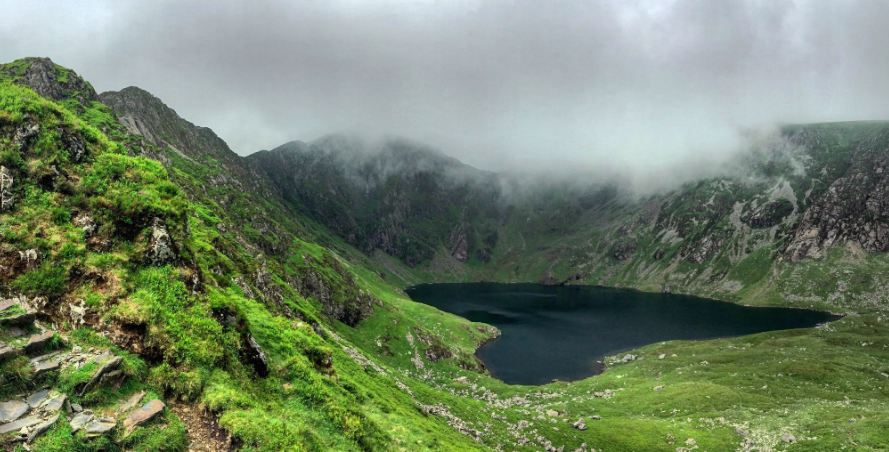
  • Dragon Duathlon: Current and former coached triathletes Jason Brown and Simon Moore took part in the new Dragon Duathlon race on Saturday. The race involves the athletes travelling the length of Wales non-stop by foot and bike starting in Angelsey and finishing in Cardiff Bay, whilst taking in some stunning iconic Welsh landmarks like Llanberis, Cadir Idris and Snowdon, to name just a few! The guys races extremely well as a team and finished 6th overall and 2nd relay team, very well done!!!
  • Caerphilly 10K: James Coxon raced the Caerphilly 10K on Sunday, coming home in a very respectful time of 38.59 (and a new PB), well done James!
  • Mumbles Triathlon: Great racing from Andrew Martin & Craig Burrows this morning at the Mumbles Triathlon with Andrew winning the short course race and Craig coming 15th in the long course race, well done guys!!!
  • Brecon Titan Triathlon: WhittleFit coach Lawrence Cronk and coached athletes Jon, Alyn and Baz raced the Brecon Titan Triathlon on Saturday. Like the Dragon Duathlon, this race is set in stunning surroundings, this time in the Welsh Brecon Beacons, with a beautiful lake swim, an 'epic' bike course and a traffic-free park-based run. Everyone raced well on this tough course with coach Lawrence showing his athletes the way with a superb 13th place; well done Lawrence!


Team WhittleFit racing roundup - 11th & 12th June 2016

WhittleFit coaches Mark and Lawrence had some people racing this weekend at Windsor, Staffordshire and in the Cotswolds, here’s the highlights:

  • Windsor Triathlon: Martin Davies raced the Windsor Olympic Triathlon this weekend with the goal to go under 2hr30 for the first time (he did this race last year and did it in 2hr32). Martin achieved his goal with a time of 2hr28 (and 29th in his age group), well done Martin!
  • Cotswolds 113: We had quite a few coached athletes and friends racing the Cotswolds 113 middle distance triathlon on Sunday, with notable performances from coached athletes Angela, Craig, James & James; very well done all, very impressed with all your performances!
  • Ironman Staffordshire 70.3: Ed Pearson, Geraint Jones & David Lewis raced the 70.3 race at Staffordshire yesterday. All raced extremely well, with some PB times and even a few demons laid to rest! Well done!


Why Are We Drawn To Ultra Long Endurance Challenges?

It’s just not normal, is it… So why do we sign up for such long endurance events? 

It was the Enduroman Festival of Endurance last weekend that got me thinking. I was there with coached athletes Adam and Mathew Pritchard and this was their 'A' race of the year. The events included 50 mile, 100 mile and 200 mile runs, Single, Double and Triple Ironman triathlons, and a 3-day ultra endurance swim challenge. It was a long, bonkers weekend, and I had plenty of time to ponder the Big Questions about endurance sport!

And the question I kept coming back to was: why on earth do we do it?

Why are we drawn to ultra long endurance events like the double or triple Brutal iron distance triathlon, Marathon des Sables, Channel swimming, climbing Everest? Why does someone like the Iron Cowboy do 50 Ironman triathlons in 50 states in 50 days?

I mean, it’s not normal is it, to run hundreds of miles, or to do a triathlon which takes more than a day to complete. It’s painful, gruelling, and risky.

Yet plenty of people are attracted to these challenges - and not just as a one-off. In fact, the ultra-endurance niche is flourishing.

5 Common Traits of the Ultra-Endurance Athlete: 

  • Persistence: crucial when you have to stick to a training schedule which could take a year (or more!) and then do a race which will be uncomfortable, and possibly boring, for many hours. Persistence helps you stick to an ultra-endurance training schedule. This in turns gives you the confidence of knowing you’ve done everything you could to succeed. 
  • Mental toughness: ultra athletes all seem to have a heightened level of psychological toughness, which can help them overcome pain and discomfort. It also helps keep their head straight over many hours of training and racing. Are they born this way, or do they develop this skill? I suspect it is largely a built-in trait.
  • Curiosity: ultra athletes aren't willing to settle for ordinary. They constantly seek new challenges, even if it’s within their own niche (different terrains, distances, or climates).
  • Mental flexibility: success in sport is never guaranteed, but your risk of failure gets higher as the challenge gets greater. With some ultra events, you are up against the elements. Even the best-prepared athlete is  not guaranteed to finish. Ultra athletes seem to have little fear of failure, with a remarkable ability to rationalise and reframe disappointments.
  • Courage: ultra athletes are bold, fearless, and courageous. I suspect that some of them might “fake it til they make it”, but that doesn’t matter. Their events need them to push aside fears, worries, and self-doubt. When you’re facing hours in the saddle or in the sea, you can’t afford to let negative thoughts creep in.

There must be other factors which make people do such ultra-long events. Do they prefer the challenge of "longer", rather than "faster"? Or does the challenge spiral from one race, pushing you to go further next time? Perhaps it’s as simple as wanting to find out just how far your body and mind can go. 

Ultra-endurance athletes tend to define themselves by the challenge they are training for. This is understandable: they’re likely to be the only person in their family or at the office who is training to run 100 miles! But I wonder if some feel they’ve built up an image that they then have to maintain?

I’ve noticed something special about the ultra-endurance community. It’s small, close, and tightly-knit. Athletes have crossed paths before, or know each other from social media. Events tend to be low-key (perhaps the challenge is enough, and doesn’t need any extra glitz!) And most ultra athletes prefer to use traditional kit rather than state-of-the art bling. This suggests that ultra athletes value hard work, friendship, and the pure simplicity of the human body vs the elements.

Have you ever done an ultra-endurance event? What attracted you to the idea?

Team WhittleFit racing and training roundup - 3rd,4th & 5th June 2016

Coaches Mark, Lawrence & Henry had lots & lots of people racing this weekend, here’s the highlights:

  • Dragon Ride: lots of WhittleFit athleetes took part in the tough Dragon Ride sportive this weekend, well done all, this is a tough event!
  • Challenge Venice: Richard Jones raced the new Challenge Venice triathlon in the beautiful tourist magnet of Venice this weekend, posting a sub-12 ironman time in the process, nice work Richard!
  • Swansea Sprint Triathlon: Rob Stroud, Stu Edgar, Luke Pryce and Rob Jones raced the inaugural Swansea Sprint Triathlon this weekend. A great new race, in hot conditions, well done all!
  • Enduroman Festival of Endurance: Adam and Mathew Pritchard took part in the Enduroman triple iron distance triathlon this weekend. Just to clarify the epic distances in this event, it’s a 7.5 mile swim, 336 mile cycle and a 78 mile run! Yes, it’s a crazy event! Both did amazingly well, with Mathew finishing 3rd and Adam 5th, very well done boys!
  • Marlow Triathlon: Paul Fairclough raced the Marlow Olympic Triathlon this weekend, well done Paul, very nice result!
  • Wimbleball: Beth Morgan raced the Wimbleball Standard Triathlon this weekend where she placed 6th overall and 3rd in her age group, well done Beth!
  • Bala Middle Distance Triathlon: Andy Rowlands raced the Bala Middle Distance Triathlon as a build up race to Ironman Wales. Andy raced very well, lots of boxes ticked on the way to his A race in September.
  • Ironman France: Chris Ward tackled the iconic Ironman France triathlon this weekend. Chris had a great race coming in at 10 hours 27 minutes, which is an awesome time on this tough, tough course.