“Testing” In Training For Endurance Athletes: What, When & Why
Why wait until race day to see how your training has progressed? There’s a better way: use “testing” throughout your training. Here’s how.

One of the most nerve-wracking aspects of race day is wondering “have I done enough?”. With endurance sport, it’s practically impossible to do the distance in training. That’s why the majority of marathon runners max out at around 21 or 22 miles for a long run, and Ironman competitors rarely bike the complete distance.

But there’s one method you can use during training that will give you confidence on race day - Testing. Testing is good because:

- You build a series of great baseline numbers to work from. No guesswork involved. Just real, personal data.

- Test sessions can be built into training as a specific tool, used every 6-8 weeks, to mark the end of a training block.

- It gives you invaluable data to assess your training progress (and plenty of time to tweak your training before race day).

- Athletes take a lot of confidence from testing, which takes the pressure off as the race approaches.

5 Ways Endurance Athletes Can Test Training Progress

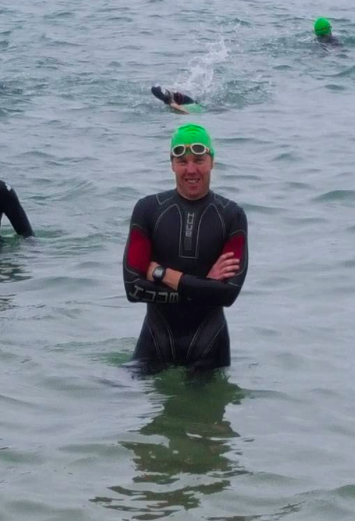
1. CSS Test (Swimming)- Swimmers should do some kind of threshold testing during training, since it’s difficult to accurately replicate open-water swim distances and environments. Work on your threshold and be confident that your race-day pace and endurance will benefit.  I like CSS sessions to test swimmers’ lactate threshold. Critical Swim Speed sessions can be very tough, so schedule them in every 6 or 8 weeks. You’ll need a stopwatch, because every second counts.

  • Warm up and do a short build set to make sure you’re warm but not tired.
  • Swim 1 x 400m time trial and record the time. If possible, take your 100m splits (they should be as similar as possible).
  • Recover fully (there’s no set recovery time).
  • Swim 1 x 200m time trial and record the time. 

Use a calculator like http://www.swimsmooth.com/training.html to work out your CSS/threshold speed. You can now use your current CSS pace-per-100m to push your training over longer swims and intervals. Track your CSS every time you test and remember that, in swimming, even an improvement of a few seconds is great progress.

2. CP20 (Cycling) - You can also calculate threshold numbers on the bike and use the data for longer training sessions. Functional threshold power is defined as the maximum power you can sustain over a 1-hour ride, but testing over 60 minutes is too much for training (for most people!). One method is CP20 - a “Critical Power” 20-minute time trial which is pretty brutal, but less demanding than a full 60 minutes. You’ll need a bike with a power meter, because what we’re testing here is wattage.

  • Warm up (various protocols for the warm up)
  • Then ride as hard as you can (sustainably) for 20 minutes.
  • Record average power (watts) and average heart rate.
  • Your CP20 number is the highest average power you can maintain for the 20-minute test ride. 

From your CP20 number, it’s simple to calculate a relatively accurate FTP (full threshold power) number: multiple it by 95%. And now you have your current CP20 and projected FTP numbers, you can calculate training pace for different distances, and project optimal power output and finish times for races.

Be conservative about how frequently you do CP20 testing during training. It’s a short session but pretty demanding.

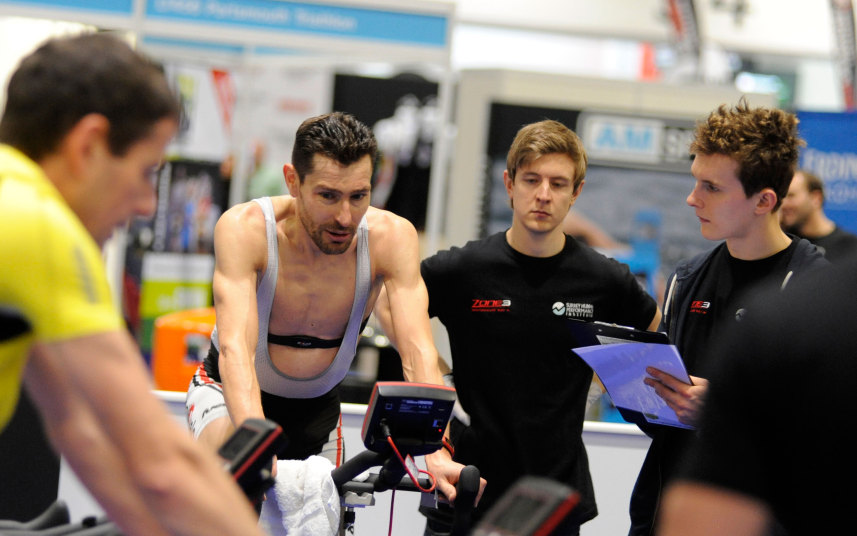
3. RAMP Testing (Cycling) - If you have access to an ergometer, you can add RAMP training to your training. During a RAMP test, you’ll be working aerobically throughout, reaching your aerobic system’s max capacity by the end of the session. So RAMP shows us our MAP (Maximal Aerobic Power).

  • Warm up (various protocols for the warm up)
  • Pedal at predetermined wattage (a relatively easy pace for most people), and increase the wattage by 25 watts every minute (for men) or 15 watts every minute (for women). Increase until failure (the point at which you can’t increase power any more).

RAMP testing is deceptive. It will probably feel pretty easy at first but will suddenly feel very demanding. Be honest about your failure level (don’t cheat yourself) and push yourself to exhaustion. With your RAMP number, you can calculate your approximate V02 Max and your Maximum Aerobic Power. Use this number to set training zones.

Although RAMP testing is very demanding, it’s something I think you can repeat every 4-6 weeks because it’s a relatively short test, and will feel easier as you get fitter.

4. Mile Repeats (Running) - Mile repeats are a simple way for any runner to measure progress. Ideally, you’ll have access to a running track, but mile repeats can be carried out on a treadmill or out on the road. Just make sure you measure a mile route, and use the exact same route every time.

How many mile repeats you do will depend on your existing fitness, and your race goal. If you are training for a shorter triathlon, or a 5K running race, you might choose to just do a single mile repeat. Record this data, use it to set training run goals, and to predict race finish times. If your race is longer, or you have a good level of running fitness, do 3, 4 or more mile repeats (but be aware that this is likely to feel demanding, and will need a lot of recovery). 

5. Parkrun 5Ks (Running) - What a fantastic resource we have in the Parkrun series! Use your local Parkrun event as a regular testing session. At 5K long, the events are ideal for all triathletes. And because they are always run over the same route, they give you accurate and replicable data. The only variables will be weather, temperature, wind and yourself. I wouldn’t advise doing Parkrun every week, mainly because your weekend sessions will probably be set aside for longer training. Every 4-6 weeks would be great.

The tests mentioned above are just an example of some of the tests available; some of them may be more applicable to you than others, just make sure you choose a form of testing that’s repeatable and replicable, so the only change in data every time is you! Log everything - not just your pace and time, but how you felt, levels of stress, and how you recover.

What forms of testing do you use throughout longer training blocks?
Fitness Expert Interview: Emma Cresswell

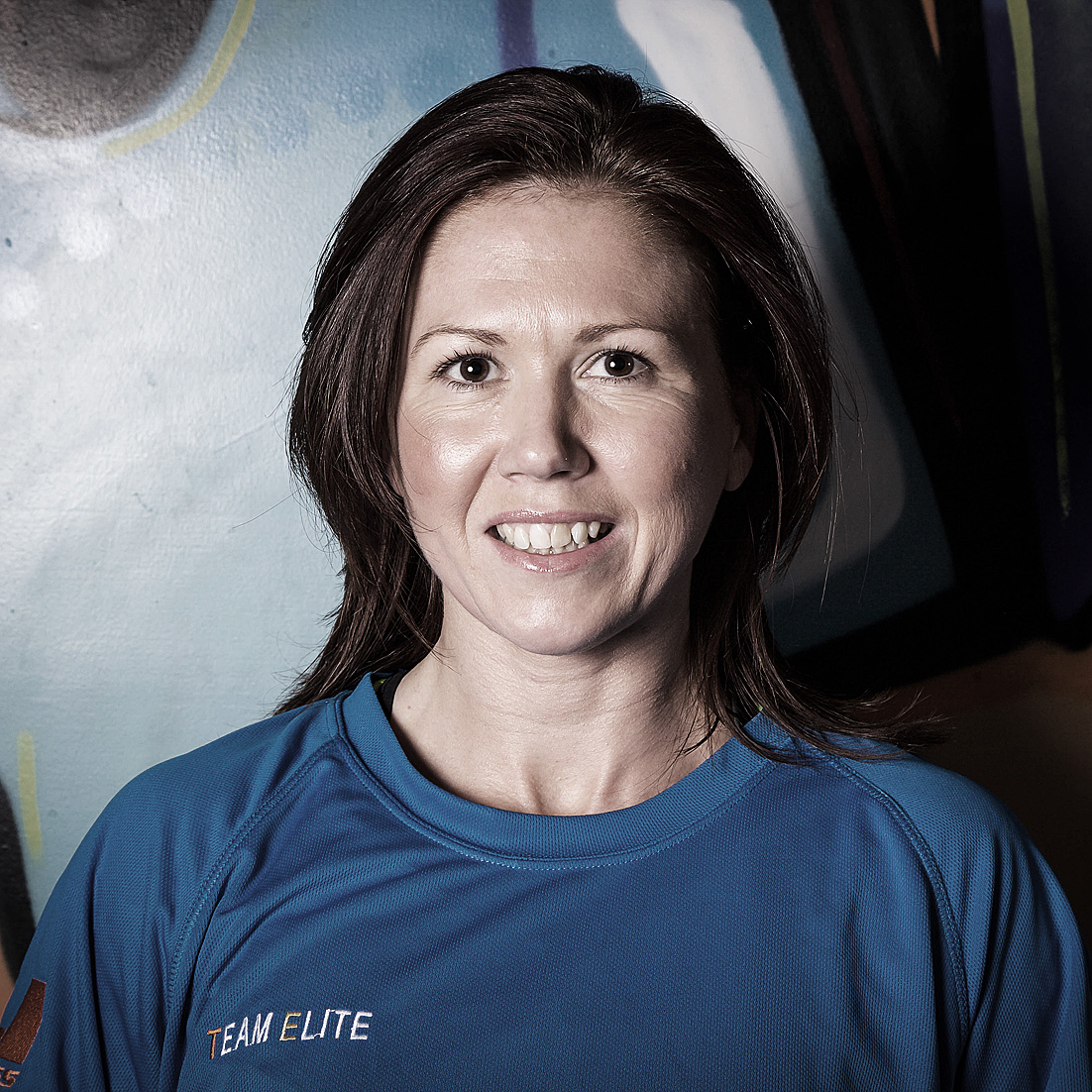
Emma Cresswell

Today we spend a few minutes with Emma Cresswell. Emma is a personal trainer and strength coach based in Cardiff with over 15 years experience in the health & fitness industry. Emma has represented Wales at powerlifting and is my go-to person in Cardiff for all strength related matters.

  • Emma, what got you started in personal training and strength & conditioning?
    • I’ve always been interested in being physically active, whether it was sport in school or training in a gym.  But my real love for strength happened after a real tough time in my life, when I lost a lot of weight because of relationship breakdown.  I decided that I needed to back in control of my life.  I decided that whatever weight I put on would be ‘good weight’ as I called it then.  So I started training like a bodybuilder.  I loved the feeling of being able to move something that I couldn’t do the week before.  Feeling the exertion needed to do it was addictive for me, and the fact that I was the only girl in the weights area of the gym in those days just drove me to do it even more!  The drive to perform became more satisfying than my physical appearance so I researched and started to learn about strength and conditioning and along the way I found powerlifting.  Next thing I knew I made the Welsh team for the Commonwealth Championships and since starting have trained up a number of power lifters, 2 of which made the GB squad in 2015!
  • Do you have a particular philosophy with regards to coaching and training?
    • Your mind will always want to give up before your body needs to.  So, if you can master your mind, your body will follow! Self-confidence goes along way in strength progression, but it all starts with the desire to achieve. 
  • Most endurance athletes shy away from strength training, why would you recommend that they give it a go and spend some time getting ‘strong’?
    • There is extensive research into this in numerous endurance sports, in recreational, well trained and highly trained athletes, and all of the articles that I have read show that strength and endurance training lead to improved short (<15mins) and long term (>30 mins) endurance capacity. It doesn’t matter what level you are, you will improve your race time with relevant strength training along side your endurance training!
  • What’s the biggest misconception who’ve come across with regards to strength training?
    • Strength training makes you put on weight! Well if that’s the case I should be the size of a house! (I’m not by the way!)  No… eating more calories than your body needs makes you put on weight. If we are talking weight then, Strength training will increase your resting metabolic rate, so if you increase your strength and keep your regular endurance training and eat your usual diet you can actually lose weight!
  •  Just how important is diet & nutrition (to help you achieve your goals)?
    • Eating an unhealthy diet wont stop you from being able to do endurance training, but eating a well-designed diet will maximise your potential.  Imagine two people owning the same car as each other.  One uses standard petrol and the other, high performance fuel.  There would be no noticeable difference when filled for the first time but after a few thousand miles, who’s car would you expect to see the better ride from?  This is the same for the human body.  Food is such a powerful thing, get your diet wrong and you will make you unhappy, out of control, angry, it can make you overweight, obese, morbidly obese, and also at the other end of the scale underweight. But, get it right and you will be empowered, motivated, happy, lean, more energetic and so many other positive effects.
  • What’s your own personal favourite exercise?
    • I’m a powerlifter. I love the big 3! The squat, the bench press and the deadlift. But for me, nothing matches the feeling of hitting a new pb on a deadlift.  Hitting a 150kg deadlift at 59kg was my best moment in my strength journey.  That’s 2 ½ times my bodyweight, and I picked it up! me. Little old me. Noone else.  I just love the raw nature of a deadlift, you are essentially just picking something up, but you are picking something up that is heavier than you would normally attempt.  You also use more muscles in a deadlift than any other strength exercise. Want to get stronger? then Deadlift…Want to save time in the gym? then Deadlift… want to increase your self confidence? Then Deadlift heavier!  Want to feel good? Then Deadlift!
  • What’s your biggest pet hate (in the gym)?
    • Bad personal trainers/strength and conditioning coach! Bad personal trainers allowing their clients to execute their training with bad form!  Its unproductive, and unsafe and it makes my blood boil!  Unfortunately for this industry is that you can do a 12-week course and then call yourself a personal trainer and charge the same as an experienced trainer who has 20years experience and has produced success story after success story. Make sure you research who you put your trust into.  The most expensive is not always the best, the cheapest may not offer any value.  In my opinion, a good strength and conditioning coach will have experience, clients who have success stories to share, have a sound knowledge of the body and how it works & moves, and ideally will have competed in a sport to a reputable level themselves.
  • If you had to choose one strength-based exercise for endurance athletes, what would it be?
    • I cant! There is no one exercise for all endurance athletes. What I would say is that strength is general, sport is specific.  Don’t spend time doing exercises like single squats on a Bosu ball while bicep curling with a wrist weights and a Vipr bar!  What I mean is don’t think that you need a fancy exercise that is specific to your sport.  Do movements that are designed to improve strength for strength.  Yes a squat will be more beneficial for a runner than a bench press so you should choose exercises that will carry over in this way but please, don’t let me see you standing on top of a Fitball squatting!
  • Outside of the athletic realm, what are some of the things you like to do in your spare time?
    • I’ve always been physically active outside of work, so my big love is water/snow based sports.  Surfing, wakeboarding, skiing, snowboarding.  I would not say that I’m expert in any of them but pretty good at all of them.  However, I have recently started to learn the Ukulele and I love it! I’m just no good at it yet!
  • Is there a sport or activity you’d love to try?
    • Yes! Pole vaulting!  An unbelievable show of athletic prowess in one move.  You need to be a sprinter, a gymnast a power athlete, an acrobat, and seriously ballsy!
  • Do you have any final tips for anyone who’s considering adding strength training to their routine?
    • Yes, keep it simple.  Go for multi joint movements that move the most weight.  Cycle the amount of repetitions so starting with high reps as you learn the movements and progress to higher weights, lower reps as you get better. Having said that, focus on volume.  Endurance athletes benefit from volume training most.  Also, remember to give yourself a de-load week, every now and then (4-8weeks depending on intensity of workout and the individual).  This is where you either work at 50% intensity or you do something completely different, to allow super compensation to occur (this is when the magic happens!)

Thank you Emma for the interview, very insightful. If anyone needs ANY advice related to strength and fitness, you can contact Emma HERE, but don't delay, Emma is in very high demand and only has spaces for a limited number of people. Train smart all! 

WhittleFit Athlete Spotlight: Craig "Pat" Patterson

Here's our latest edition of the WhittleFit Athlete Spotlight series, where we let you inside the mind of WhittleFit coached athletes and see what makes them tick.

This month we focus the spotlight on Craig “Pat” Patterson:

  • What got you started in endurance/ multisport?
    • Initially it was via a friend who thought they were fitter than me so she chose a triathlon as the means to see who was the fittest. It was meant to be a one off but I enjoyed the race and the feeling at the end. Also an unexpected freebie from Mark got me much more involved. When we worked together when Mark was in the RAF he gave me a RAF triathlon water bottle and when I took up a new job in the July prior to my first race the Regimental Sergeant Major who was an Army Triathlete saw me walking around with the bottle and asked in no uncertain terms what I was doing with it & if I did triathlon. He took me to my first Army triathlon training weekend and encouraged me to keep going after that first race.
  • How long have you been with WhittleFit?
    • It’s been about two and a half years.
  • Tell us about your home and work life?
    • I have served 19 years in the Army and have recently been selected for promotion to Warrant Officer Class 2. Currently working at Abbeywood in Bristol but live out in Beachley under the M48 bridge with my wife Lyndsay.
  • What was your first race?
    • The Reading Sprint Triathlon in 2012.
  • How many races have you done?
    • The Army put on lots of cheap races during the season so for the last few seasons I have done 10+ races per year form Super Sprint through to Half IM.
  • What advice would you give someone starting out in triathlon?
    • I think it helped me to train with friends at the same unit as me when I first started out, there were a group of us that would do Turbo sessions in the hanger together on a Wednesday afternoon and do swim sets together. It helped with motivation when the weather was bad or I just didn’t feel up for the session. So if you are just starting out join a club whether that is a swim, bike or run club as it’s great to train with like-minded people as you can always pick up a tip or two when you are training.
  • What is the most rewarding part of your journey racing in endurance or multisport?
    • I used to play prop for the Army when I was in my early twenties and peaked at 105Kg. I have dropped over 30Kg since I stopped playing rugby but since I took up triathlon my body shape has changed considerably. Seeing the faces on friends & family who have not seen me for years is priceless and it has happened that people do not initially recognise me.
  • What is your biggest accomplishment so far?
    • I was part of the Army Senior Triathlon team that won the Inter-Services title in 2015 completing one of my goals I set 2 years ago to go from Army Prop to Army Triathlete.

Pat is coached by WhittleFit coach Chris Tasker. Pat’s progression from rugby player to Army triathlete has been immense, congratulations Pat and good luck for the 2016 season!

Race Day Success: Do You Have The Killer Instinct?

Everyone knows that elite athletes have a mental “edge”. Do amateur athletes need a champion mindset to win?

We all have different reasons for doing competitive sport. For some, it’s the personal achievement of getting fitter, losing weight, overcoming personal barriers. For others, it’s the challenge of beating PBs or even winning races and being selected to race overseas.

One thing unites us all: races.

But do amateur athletes need the mental edge, the “killer instinct”, the champion mindset in order to achieve? Or is that what separates elite and Pro athletes from amateurs?

As a coach, it’s my opinion that a “winner’s mindset” is important for every athlete, regardless of your goals. It goes without saying that a talented amateur who is aiming for top 3 in a race needs to have mental strength and self-belief. But what about the weekend warrior, or first timer, who just wants to get round in one piece? Do they really need to work on their mindset and self-development? Isn’t training to swim, bike, and run enough?

7 Ways You Can Benefit From A Champion Mindset

  • Mental strength will help you overcome bumps in the road
    • Whatever your goal, and whatever level you compete at, you are likely to meet challenges along the way. Take a cue from elite athletes and develop mental strength, focus and a “Pro” attitude. This will help you overcome barriers, or get up faster when you meet setbacks.
  • Being focused streamlines your training, nutrition and athlete lifestyle
    • The more seriously you take your training, the easier it is to prioritise the things you need to do. If you tell yourself that training is important to you, it’s easier to tell other people that it matters, too. And once you start believing that your athlete lifestyle matters, you’ll find it easier to slip into a routine.
  • Self-development work benefits other areas of life, too.
    • Sport benefits so much more than our body. By working on your mental state as you train, you’ll discover that the strengths you gain flow over into other areas of your life. Goal setting, time management, organisational skills, focus, stress management, prioritisation…. your career, home life, relationships will all benefit from the things you learn in training. Training your mind helps you take valuable lessons from sport.
  • Mental focus boosts adrenalin and peak performance
    • Working on your mental state actually gets your body into a different state, too. You’ll be able to tap into adrenalin and other useful hormones will which fire you up for training and racing, giving your performance the edge.
  • The mental edge strengthens self-belief
    • By adopting an elite-athlete’s mindset, and seeing yourself as a champion, your self-belief and confidence will grow. It’s not arrogance, and it’s not delusional. It’s confidence in your abilities, skills and talents.
  • Knowing your “why” will make success sweeter
    • Part of a champion attitude is knowing exactly why you are training and racing. What does it mean to you? What do you want to achieve? Knowing your “why” will heighten the happiness you feel when you finish your race.
  • You might achieve even more than you set out to do!
    • Finally, if you adopt a champion mindset, you may find that you are capable of much more than you thought!

New coach joins WhittleFit for the 2016 season!


We’re very pleased and excited to announce the arrival of a new coach to Team WhittleFit for the 2016 season! Henry Wright will join Lawrence, Chris and coach Mark as a running and triathlon coach, bringing with him a wealth of experience in the world of endurance sports.

Henry has a coaching philosophy centred around quality and balance, and has been involved in triathlon for the past 10 years - with Ironman finishes in both the UK and Spain. His endurance background spans 15 years of racing - including mountain biking, trail running, road cycling and ultra-running - all of which have re-enforced his number one focus/belief: high quality recovery equals high quality performance.

Henry has qualifications & experience in:

  • Triathlon and multisport coaching
  • Personal Training (DipPT)
  • BSc Biology
  • Nutrition advice
  • Wattbike testing
  • Sports massage
  • Run leader (LiRF)
  • Mountain-bike guide
  • Boxercise instructor
  • TRX/suspension training
  • Indoor group cycling instructor

If you're in the Cardiff & Penarth area and interested in coaching with Henry, CONTACT US now!!!