Ironman Wales 2017 is 6 months away, but we like to be prepared here at WhittleFit, so today coach Lawrence talks about bike choice for the tough Ironman Wales course and the thought and effort he placed in his bike choice decision for his 2016 Ironman Wales race.
So in 2016 I had my second crack at IRONMAN Wales. Thanks to the best conditions that race has seen I had a good day, so did most, which showed in my position. Despite being an hour faster than I was in 2013 I only placed one position higher in my category! The winner of my category actually posted the fastest bike split of the whole race, a crazy 4:48, an hour faster than I could manage. Anyhow, I was still pleased with my bike split and my performance overall.
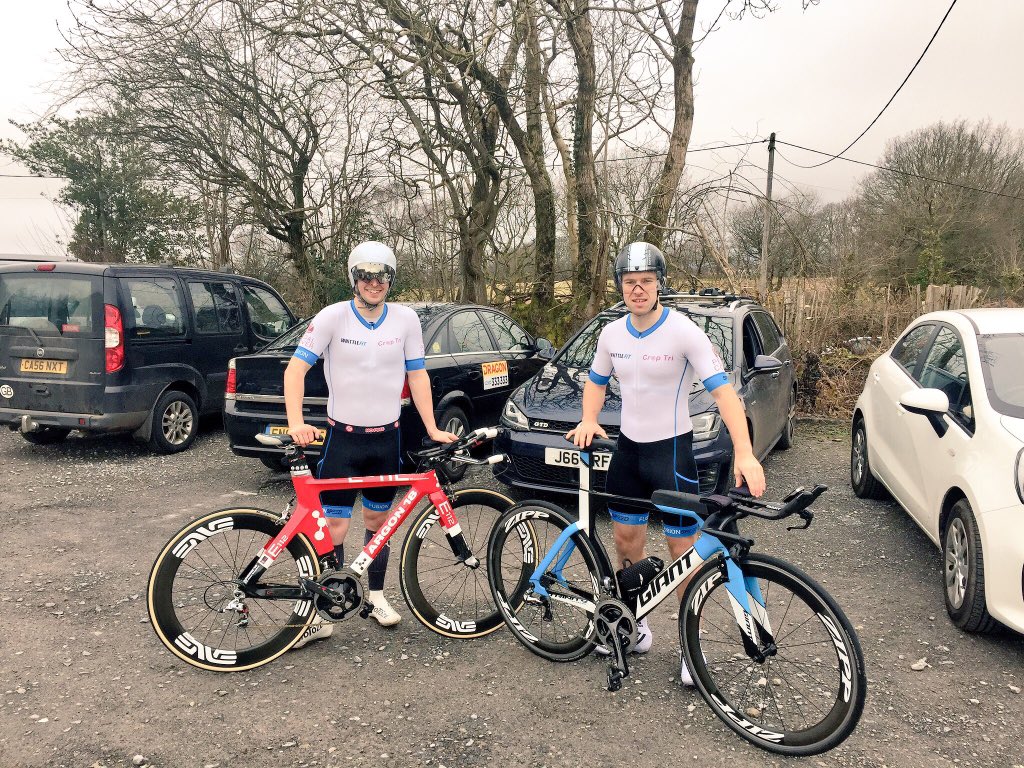
So what? Well, something you might not have expected is the fact that I chose to ride a road bike. No deep section wheels, no clip on aero bars, no bento box or extra bottle cages, no modifications. It wasn’t a decision I made lightly. During 2016 I rode on the IRONMAN Wales course seven times on three different bikes. To put it simply, on my TT bike I felt like I was ‘surviving.’ I didn’t feel I could utilise the aero position enough to get the true benefit from that bike. I also felt tentative descending through some of the narrower lanes and then felt I was losing momentum too easily on the ascents, generally I was glad to get off it in Tenby! In contrast, on my road bike I felt confident and more aggressive, I was flowing through the descents at a better pace and using a range of hand and body positions to stay aero and ascend smoothly without too much heart rate fluctuation. I came up with a theme for my race which was ‘be light.’ I knew I had to make up in weight savings what I was losing out on in aerodynamics so I shed weight wherever I could. I carried one drinks bottle and calculated my intake around the feed station locations. My food was in my jersey pocket so I had no extra baggage on my bike frame. I wanted my bike to look and handle like it would on any other ride. I even paid special attention to my diet around the taper to arrive at the start line the lightest I had ever been. Practice on the course allowed me to set heart rate boundaries for the flatter sections with a ceiling figure I was not to break even on the steepest climbs. I had seen that my average speed after the first ‘flat’ loop would drop by 1 KM/h after the first ‘hilly’ loop and by a further 1 KM/h after the second ‘hilly’ loop, if I kept up the same effort throughout, this allowed me to predict my bike time during the race and keep me focussed.