True or False: Eating Frequent Meals Boost Your Metabolism….

Have you been told that eating 5-6 mini meals throughout the day will boost your metabolism? Let's look at the truth about meal frequency. 

If you've ever tried to get leaner (whether that's to make racing weight or to shave a few minutes off your bike time) you might have come across this common piece of advice:

Eat 5-6 meals and snacks a day (rather than 3 meals). It will boost your metabolism, burn more calories, and lead to less stored body fat. 

For endurance athletes, fuelling the body is an important issue which we need to get right.

So, what's the truth? Should we eat 5-6 times a day, or stick to 3 square meals (and the occasional snack)?

The idea of "grazing" on meals every 2 hours or so is popular with athletes across all sports, not just triathlon and endurance events. The theory is that eating more frequently means your body burns more calories (due to the thermic effect of food), and you only ever take in the energy your body and muscles needs. So you store fewer calories as fat, and keep topping up your energy reserves, revving up the metabolism.

The truth? It doesn't quite work that way.

Read more: True or False: Eating Frequent Meals Boost Your Metabolism….

"I don't want to lose my fitness"

Losing triathlon fitness

Some triathletes, cyclists and runners are nightmares!!! They dread losing fitness. "I don’t want to lose my fitness" is perhaps one of the most commonly uttered statements by triathletes, cyclists and runners to their coach, friends and family. I have no actual data to support this, but given the number of times I have heard it (and expressed it myself!) I am reasonably confident that it must be true.

I think these endurance athletes have a dreaded fear that between the time they close their eyes at night and awake in the morning they have lost inordinate amounts of fitness. A day off from training is a triathletes nightmare – they believe they can feel the fitness being sucked out of their bodies!

The meaning of fitness varies from person to person. Are you fit because you can ride a 100 miles? Are you fit when you race to your potential? Are you fit because you can achieve most of your workouts or goals? No matter what your definition of fitness is, it does not disappear as quickly as the sunburn from your last race - FACT!

Read more: "I don't want to lose my fitness"

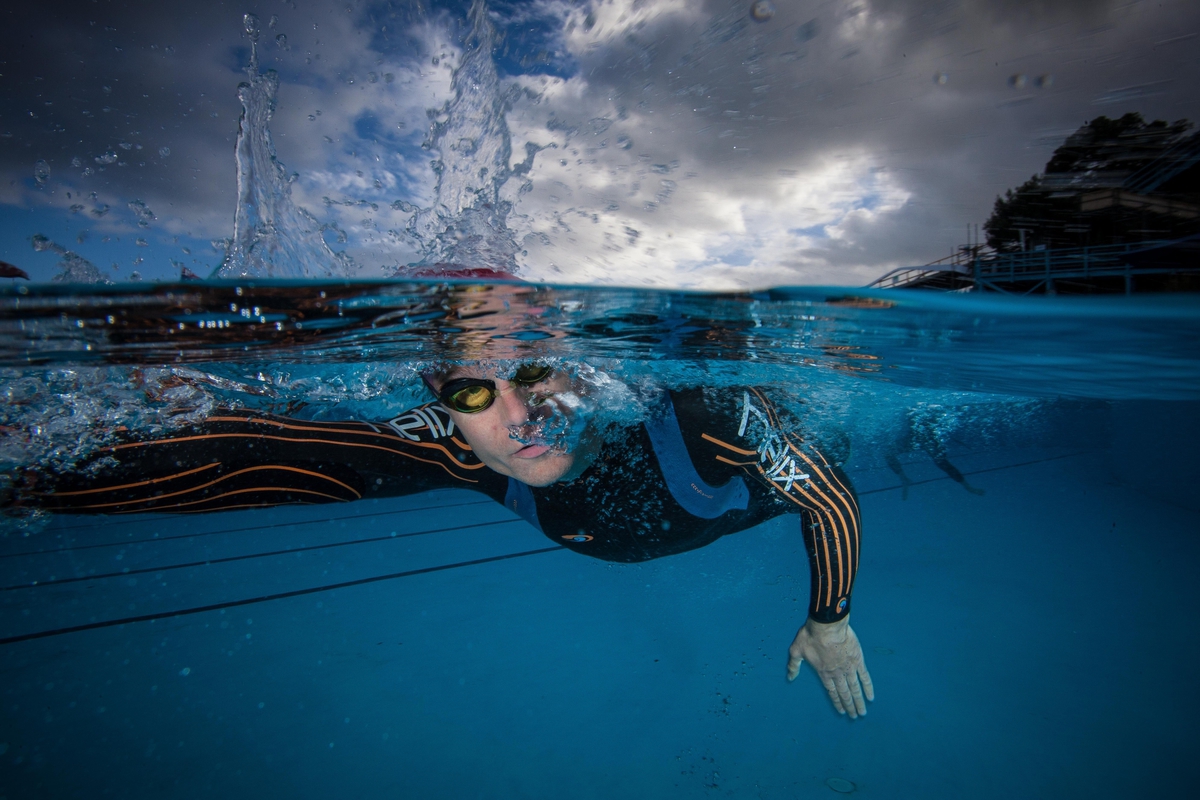
Are you ready for some open water swim training?

With the triathlon season upon us, and many more people deciding to undertake bigger and longer triathlons, I thought it would be timely to highlight a few tips and tricks regarding the open water aspect of triathlon.

Because open-water swimming includes many variables that differ from normal pool swimming, the only way to get better is to practise; therefore you must get out and swim more in the open water. This is one of the biggest fundamentals of open water swimming, nonetheless, here are my top tips to help you excel at your next open water triathlon race:

1. Train in the open water
If you have a race in the open water, then you must train in the open water! Do not use the triathlon race itself as your first open water swim session, if you do you’re setting yourself up for disaster.

Read more: Are you ready for some open water swim training?

Why I love "Big Day Ironman Training" - And you should too!

Want to know the one of the key sessions I use with clients - and myself - for Ironman triathlon training? Welcome to the concept of "Big Day Training" for triathletes.

Training for an Ironman (or any other big and slightly scary endurance event) is about a lot more than training your body. Yes, your cardiovascular system, muscles and connective tissue need to be trained for strength and fitness. But your mind needs to be trained too.

After all, when you're facing hours face-down in open water, hours pedalling away on your bike, and then those final (potentially lonely) hours putting one foot in front of the other on the road, your mind is what will keep your body moving forward… or let it give up.

If your mindset isn't rock solid, endurance events like Ironman become a lot more difficult. Some would say impossible.

So how should triathletes make sure their mind is as highly-trained as their body when it comes to big endurance events?

Here's a concept I really like. A "big day" of training which simulates race conditions, distance, intensity and mental toughness. It's the only way I've found to truly prepare my clients (and myself) for the emotional AND physical reality of the sharp end of tough endurance events.

Read more: Why I love "Big Day Ironman Training" - And you should too!

Race Report: Craig Burrows - London Marathon 2015

WhittleFit coached triathlete completed the London Marathon last month, read on to hear his trials and tribulations: 

What am I? A triathlete, or a runner?

Thats the question I find myself trying to answer whilst simultaneously justifying my London Marathon Ballot place to my coach Mark Whittle. Having only started distance running 4 years ago the big raceexperience is still relatively new to me and ever since the Cardiff Half Marathon in 2012, I've been hooked.

Fast forward 2 years to 2014 and I found myself staring down the barrel of the London Marathon followed by my first Ironman in September 2014. It was set to be a big year. After sitting down with the boss it was decided that in order to successfully negotiate an Ironman (a task that, in hindsight, I had grossly underestimated) I should defer my marathon entry to the April of 2015 so, begrudgingly, I did.

The year 2014 drew to a welcoming close with my legs and ego slowly recovering after the most grueling 140.6 miles of my life. It was then time to start planning my goals for 2015 and turn my attentions to the London Marathon. Setting realistic time goals wasnt exactly my forte and executing them had proven even less successful in the past, finding myself metaphorically chewing my bike stem, dribbling on the floor or stopping for a burger all too often in the last few miles of an event.

Read more: Race Report: Craig Burrows - London Marathon 2015