
Is your swim bag missing something?
It’s fair to say that adult triathlete’s who come from a swimming background are the minority and also true that the majority like swimming the least. Hence the array of pool toys to a) try and ingrain the technique you never mastered as a child and b) to entertain you in the pool!
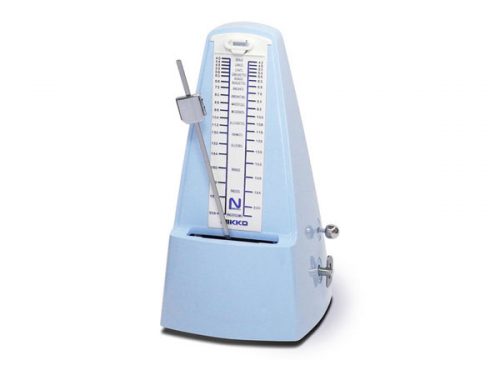
Triathlete’s love a training aid or gadget, that’s a given. I can guarantee those reading this will have most or all of the following in their swim bag: Pull buoy, kick board, fins and paddles. But there could be a simple little gadget that you have overlooked, a tempo trainer. If you are not familiar, it’s a metronome (or wetronome) about the size of a watch that fits under your swim cap. It can be used to beep at the end of a length to help you pace an interval or, it can be used to beep on every stroke to give you a stroke count or strokes per minute. It is the second of the options I’d like to talk about in this article.
One thing adult swimmers can struggle with is timing and rhythm. Their stroke rate might be too low as they pause when they breathe or it might be lopsided as they favour rotation on one side. Trying to match each stroke with the beep will immediately identify any imbalances, pauses or dead spots. On the flip side a stroke can be too fast or choppy, not allowing enough time to get a feel for the water and utilise the catch, pull & push.
To get started with a wetronome you’ll need to work out your normal stroke rate. Get someone to count how many strokes you take in 15 seconds and multiply by four to give you strokes per minute (SPM). Set the wetronome at the same SPM and swim some 50-100M repeats. Each hand entry should match a beep. If you have timing and rhythm flaws then following the beep will feel strange. You may find you have to take a breath more swiftly and turn your head and/or body less to keep up. Practice at your current stroke rate until following the beeps feels natural, this may take 5 minutes, it may take a few months. Then you are ready for a little test:
Set the wetronome at around 10 SPM lower than your natural stroke rate. Swim 50M and record your time. Take adequate rest, increase the SPM by 2 and repeat another 50M. Keep repeating and recording times. Your time will peak at a certain stroke rate and then begin to decline. It is that peak or optimal stroke rate we are looking for. Stroke rates can vary hugely depending on your body shape, arm mechanics, strength and the type of swimming you do. I’d like to keep this simple and suggest two settings. Try 3-5 SPM lower than your optimum stroke rate for endurance swim sets and use your optimum stroke rate for speed/threshold work. Once your optimum stroke rate begins to feel comfortable, try the test again, see your improvements and reset your numbers.
With the season upon us using a tempo trainer allows improvements in technique to be made whilst working on speed and endurance by swimming without extra toys and drills. Surely a good thing for the time crunched athlete.